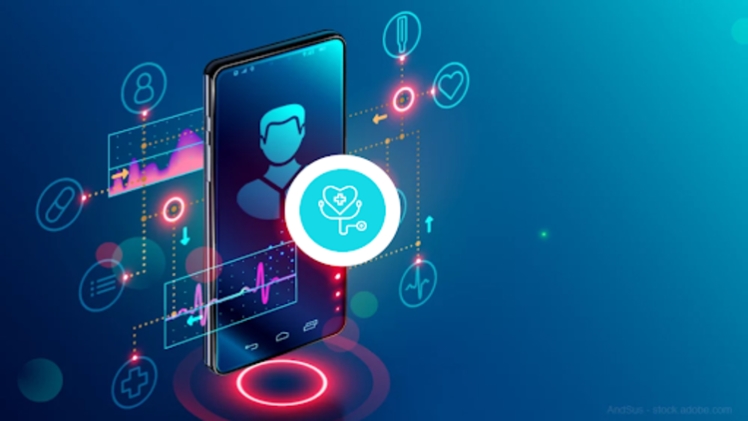
Mobile applications have rapidly spread in all areas. The healthcare sector is no exception, which solves many problems thanks to medical applications: online consultations, quick access to medical information, making an appointment, prompt transmission of examination results, and much more.
Varieties of medical applications
There are three main types of healthcare applications:
- Health monitoring applications. The most common type of application. They can regulate diet, rest, track steps, and stress levels.
- Telemedicine applications. Their purpose is to connect patients with medical staff. They are divided into primary, emergency, and nursing care.
- Applications for health regulation. They are designed to track chronic diseases, control medication intake or collect information needed by healthcare professionals.
Each has its characteristics, different scope, and features in development.
Top Benefits of Healthcare Apps
Healthcare app development services enable medical instances to improve the quality of their services and users to improve their health outcomes and make healthcare easier for healthcare professionals. Application capabilities encourage users to receive personalized service and provide the ability to exchange various information and access multiple medical databases quickly.
Do not forget about the security of such applications. Any unauthorized external intervention can endanger, without exaggeration, people’s lives. For this and other reasons, any health application must be tested for all possible bugs and vulnerabilities before being released to the market. Find out the details in one such software and app testing firm further on the link – https://testfort.com/healthcare-software-testing.
Such capabilities of medical applications allow for making more accurate diagnoses and prescribing timely treatment for patients. The functionality of such applications eliminates the manual entry of information, facilitating the storage of various data on patients’ health.
Use of medical applications and the consumer market
In 2021, the medical app market was about 50 billion USD; by 2028, it is projected to be worth 150 billion USD. Due to the Covid pandemic, the app market has grown by 14% in 2020, so people have decided to use health apps more actively. The demand for medical applications is assumed to increase by 14% annually.
All this suggests that users strive to use medical services more efficiently, wanting to keep in touch with their doctors as safely as possible, find out the results of examinations, and track various health indicators. In addition, applications provide prompt solutions to many issues. And the statistics speak for it: from 2019 to 2021, consumer adoption of medical applications has increased from 11% to 46%.
Health app usage circle
Information technology in medicine has become widespread. As of early 2022, more than 350,000 such applications are used by the elderly aged 50-80. About 30% of older users use one or more medical applications, approximately 15% used them before, and the vast majority of 55% reported not using this technology.
Even though telemedicine applications have different purposes, they aim to improve overall health indicators. Therefore, you can find differences in the use of applications with specific tasks among consumers aged 50-80 years:
- for exercise – 31%;
- for proper nutrition – 19%
- for weight loss – 17%;
- to regulate sleep – 14%;
- for pressure control – 8%;
- for meditation – 7%;
- for the treatment of stress -4%.
For younger consumers, the statistics are different. Since the beginning of 2022, 83% of the population owns smartphones (6.64 billion people). And 77% of users aged 19-29 used gadgets for health-related searches. At the same time, 84 million US consumers used health apps. Consequently, about 30% of adults use medical applications to obtain accurate health data.
Statistics show that adults under 55 are twice as likely to use this technology as older users: 25 and 12%.
2020 showed that a fifth of adult consumers used fitness trackers and apps to track and maintain their health:
- health monitoring applications were used by 20% of males and 17% of females;
- fitness trackers – 16% of males and 21% of females.
The age category is of great importance in applying this medical technology: users aged 18-34 years are three times more likely to use fitness trackers than users aged 55 years and over (28% and 10%).
Also, the use of medical applications directly depends on the social and economic factors of various population segments. Consumers whose family income is more than 100 thousand:
- use the application – 26%;
- use trackers – 31%.
Instead, usage drops sharply for consumers with household incomes of less than $40,000:
- use the application – 15%;
- use trackers – 14%.
Among the ethnic segments of the population, there is inequality in the use of the mHealth application, which is distributed as follows:
- Asians – 16%
- African Americans – 23%
- Hispanics – 19%
- Caucasians – 20%;
- did not report – 8%.
Therefore, the percentage of use of health apps is affected by age, financial status, and ethnic group.
In the end
Despite the different age groups, financial status of families, and ethnicity, there is an increase in the use of healthcare applications every year. It is due to the efficiency and convenience of providing many medical services, allowing you to save time and make prompt decisions. In addition, using these technologies reduces the statistics of the number of diseases, reducing the risks associated with the condition of patients. To explore the benefits of these healthcare applications, click here.