Introduction
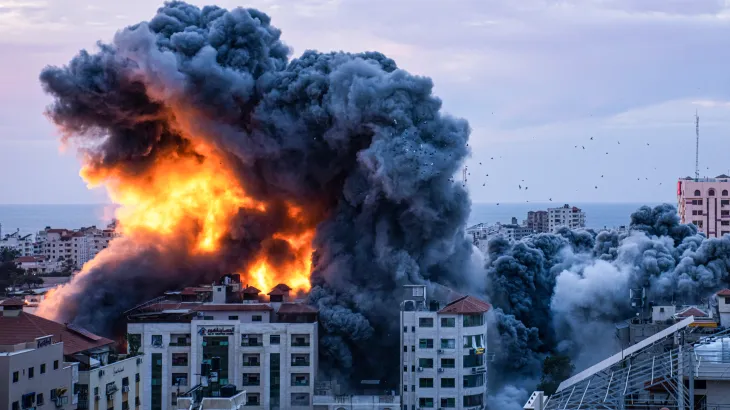
The recent conflict between Palestine and Israel has once again brought the world’s attention to one of the most long-standing and complex conflicts in modern history. The ongoing violence in the region, characterized by airstrikes, rocket attacks, and ground clashes, has resulted in immense human suffering and has raised serious questions about the prospects for peace in the Middle East. This article aims to provide an overview of the recent conflict, its root causes, the devastating impact on civilians, and the international response.
A Historical Perspective
The conflict between Palestine and Israel dates back over a century, rooted in competing national identities and territorial claims. In 1947, the United Nations proposed a plan to partition British-controlled Palestine into separate Jewish and Arab states, which was accepted by the Jewish leadership but rejected by Arab nations. The declaration of Israel’s independence in 1948 led to a series of wars and disputes that have continued to this day.
Recent Escalations
The recent conflict, which began in May 2021, was triggered by a series of events, including tensions over the planned eviction of Palestinian families from East Jerusalem’s Sheikh Jarrah neighborhood, clashes between Israeli police and Palestinian worshipers at the Al-Aqsa Mosque, and rocket attacks from Gaza into Israeli territory. Israel responded with airstrikes in Gaza, and Hamas, the Palestinian militant group, launched a barrage of rockets into Israel.
The Conflict’s Toll on Civilians
One of the most shocking aspects of this conflict has been the toll it has taken on civilians, particularly in Gaza, one of the most densely populated areas in the world. Israeli airstrikes targeted residential buildings, schools, and hospitals, resulting in a significant loss of life and widespread destruction. Palestinians in Gaza endured a devastating humanitarian crisis, with inadequate access to clean water, food, and medical care.
On the Israeli side, civilians faced constant rocket attacks, causing fear and trauma among the population. The conflict also reignited long-standing tensions between Jewish and Arab communities within Israel, leading to violence and civil unrest in cities like Lod and Haifa.
The Role of International Actors
The international community responded with widespread concern and condemnation of the violence. Several countries, including the United States, called for an immediate ceasefire and expressed support for a two-state solution to the Israeli-Palestinian conflict. Egypt and Qatar played a crucial role in mediating negotiations between Israel and Hamas, ultimately leading to a ceasefire on May 21, 2021.
Despite the ceasefire, the underlying issues of the Israeli-Palestinian conflict remain unresolved. The conflict has underscored the need for a comprehensive, long-term solution that addresses the legitimate aspirations and security concerns of both Israelis and Palestinians.
Humanitarian Crisis and Reconstruction Efforts
In the wake of the ceasefire, the focus has shifted to addressing the immediate humanitarian needs in Gaza and facilitating the reconstruction of the heavily damaged infrastructure. International aid organizations have been working tirelessly to provide assistance to those affected by the conflict, including food, shelter, and medical care.
Efforts to rebuild Gaza face significant challenges, including funding shortages and political obstacles. The international community must come together to support reconstruction efforts and ensure that Gaza’s residents can rebuild their lives in a stable and secure environment.
The Quest for a Lasting Peace
The recent conflict has once again highlighted the urgent need for a lasting peace between Israelis and Palestinians. The two-state solution, which envisions an independent Palestinian state alongside Israel, remains a widely accepted framework for resolving the conflict. However, achieving this solution requires addressing core issues such as borders, Jerusalem, refugees, and security arrangements.
The conflict has also underscored the importance of involving all relevant stakeholders, including Palestinian leadership, in negotiations. The United States and other international actors must play a constructive role in facilitating dialogue and negotiations between the parties involved.
Conclusion
The recent conflict between Palestine and Israel has been a shocking and tragic event, resulting in significant loss of life, destruction, and suffering for civilians on both sides. It serves as a stark reminder of the urgent need for a comprehensive and lasting solution to the Israeli-Palestinian conflict. The international community must continue to support humanitarian efforts and work towards a peaceful resolution that respects the rights and aspirations of both Israelis and Palestinians. Only through diplomacy, dialogue, and a commitment to justice can a more peaceful future be achieved in the Middle East.