

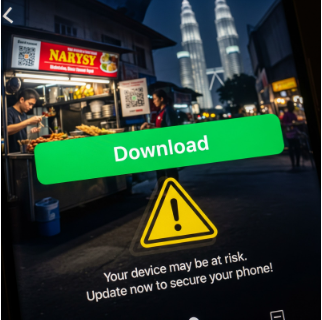
Fake APK downloads have been one of the fastest-growing cybercrime vectors in Malaysia over the last three years. But why do Malaysians—especially smartphone-heavy users—continue to fall for them?
The answer is complex, involving psychology, culture, convenience, and digital habits. In this article, we explore why fake apps spread so easily and how Malaysians can build stronger protection against them.
1. The Malaysian “Shortcut Culture” Online
Let’s be honest: Malaysians love shortcuts.
Free shortcuts. Faster shortcuts. Premium shortcuts without paying.
This mindset drives many to search for:
- “modded apps”
- “free premium features”
- “no ads version”
- “faster update APK”
Cybercriminals know this well—and they exploit it.
This isn’t about blaming users. It is about understanding behaviour patterns so we can reduce risks effectively.
2. The Psychology Behind Fake APK Attraction
Here are the core psychological triggers cybercriminals use:
✔ The Fear of Missing Out (FOMO)
People want the newest features before others.
✔ The Desire to Save Money
Paid features offered for free feel irresistible.
✔ Trust Via Familiar Logos
Most fake apps use brand logos that look authentic enough to trick casual users.
✔ Peer Influence
“If my friend shared it, it should be safe,” right?
Wrong—but many still assume this.
✔ Optimism Bias
Users believe “It won’t happen to me.”
These biases create the perfect environment for malicious APKs to thrive.
3. The Most Common Fake APK Scenarios in Malaysia
Based on digital forensic reports and public complaints, these are the top situations:
A) Downloading from Telegram groups
Many Malaysians join public groups offering quick APK links—often unsafe.
B) Searching on Google and clicking the first unofficial link
SEO manipulation makes fake download sites rank temporarily.
C) Social media ads offering premium versions
Hackers run short-lived ads to bait thousands.
D) File-sharing between friends
A harmless-looking “send me that file” is a major infection route.
E) QR codes at events or malls
Some QR codes lead to unsafe sites disguised as promotions.
These vectors show that the problem is not just technical—it is behavioural.
4. What Happens When a Fake APK Installs Successfully
Most users think malware = virus that destroys phone.
But modern malware is more sophisticated:
1. Silent Data Extraction
Contacts, photos, SMS, GPS data.
2. Bank credential harvesting
Some malware mimics TAC SMS pages or overlays login screens.
3. Background resource hijacking
Your phone becomes part of a botnet.
4. Auto-installation of additional malicious apps
One infection leads to another.
5. Camera/mic access without permission
Yes, this happens more often than people realise.
5. Malaysia Needs a “Digital Immunity System”
Just like how the human body protects itself, digital behaviour must follow protective layers.
LAYER 1 — Source Verification
Only install apps from verified sources.
LAYER 2 — Permission Awareness
Reject permissions that don’t make sense.
LAYER 3 — Social Group Education
Family WhatsApp groups should not share unsafe links.
LAYER 4 — Device Hygiene
Delete old APKs and unused apps.
LAYER 5 — Reference Checking
When unsure, cross-check information with trusted digital pages such as:
https://my.bossku.club/
Again, this link serves purely as an informational reference point for verifying app-related knowledge safely.
6. Strengthening Malaysia’s Digital Future
Reducing fake APK infections is not just about installing antivirus—it’s about changing user habits.
If Malaysians embrace:
- Skepticism
- Careful checking
- Source awareness
- Critical thinking
- Digital responsibility
…then mobile malware will drop dramatically over time.
